
A beautiful, well-kept home is the result of thoughtful care, consistent upkeep, and attention to everyday details. Small problems such as loose handles, dripping faucets, damaged walls, sticking doors, or worn-out fixtures can gradually become more expensive if they are ignored. Learning basic home repair skills can help homeowners handle simple issues, maintain their property, and recognize situations that require professional assistance.
Thehometrotters Homerepairs: Easy Fixes and Tips provides practical guidance for everyday maintenance and straightforward household repairs. From walls and plumbing to doors, furniture, flooring, and seasonal maintenance, these ideas can help you keep your home functional and comfortable.
Before beginning any repair, understand the problem, gather the appropriate tools, and work carefully. For electrical, gas, structural, or other potentially dangerous problems, professional help may be the safest choice.
1. Basic Home Repair Tips for Beginners
Beginners should start with small, low-risk projects. Tightening a loose screw, replacing a cabinet handle, filling a small nail hole, or adjusting a door hinge can help you become familiar with basic tools.
Always identify the cause of a problem before attempting a fix. A quick patch may hide an issue temporarily without actually solving it. For example, repeated moisture around a wall may indicate a leak that needs attention rather than another layer of paint.
Read manufacturer instructions when repairing appliances, fixtures, or specialized materials. Keep your workspace clean and organized, and avoid rushing through unfamiliar tasks.
It is also useful to keep a simple record of repairs, including dates, materials used, and any professional work completed. This can make future maintenance easier.
2. Fixing Common Wall and Ceiling Problems
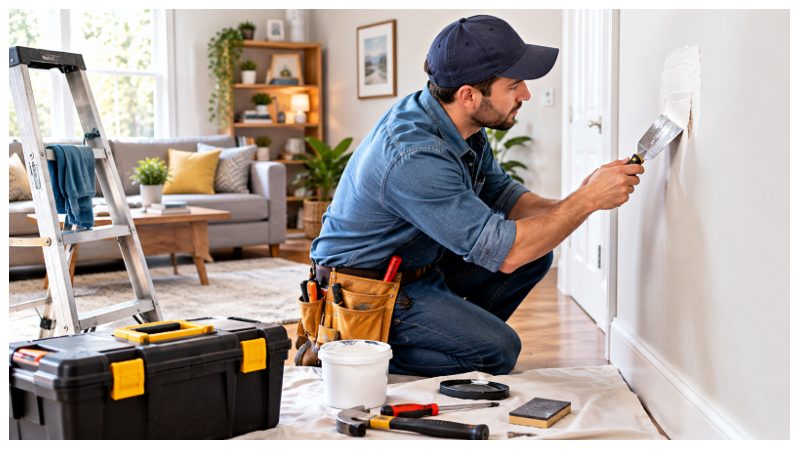
Small holes, cracks, scuff marks, and peeling paint are common household issues. Minor nail holes can usually be filled with suitable wall filler, allowed to dry, and lightly sanded before repainting.
For small surface cracks, first determine whether the crack appears cosmetic or may indicate a larger issue. Changes in crack size, significant movement, water staining, or widespread damage deserve further investigation.
Ceiling stains can be particularly important because they may be associated with moisture. Instead of simply painting over a stain, identify and address the source first.
When repainting, clean the surface and prepare it properly. Matching the existing paint color can be difficult, so testing a small area before painting an entire section can prevent an uneven finish.
3. Simple Plumbing Repairs at Home
Some minor plumbing problems can be addressed with basic maintenance. A loose faucet handle, slow drain, or worn washer may require a relatively simple adjustment or replacement.
For a slow drain, remove visible debris where appropriate and clean the drain components according to the fixture’s instructions. Avoid forcing tools into pipes or using aggressive chemicals without understanding their compatibility with your plumbing system.
A leaking faucet should not be ignored because continuous dripping wastes water and can eventually damage surrounding surfaces.
Before working on plumbing fixtures, know how to shut off the relevant water supply. If water continues flowing, a pipe is damaged, or there is significant leakage, stop the repair and seek qualified assistance.
4. Easy Electrical Issues to Handle Safely
Electrical repairs require greater caution than many other household projects. Simple tasks such as replacing a bulb or resetting a properly functioning circuit breaker may be appropriate for homeowners, but more complicated electrical work should be handled by a qualified professional.
Never work on exposed wiring unless you are properly trained and understand the applicable safety requirements. Turn off power at the appropriate electrical panel before permitted maintenance and verify that the circuit is de-energized using suitable equipment.
Burning smells, sparks, repeated breaker trips, hot outlets, damaged cords, or buzzing electrical fixtures should not be treated as ordinary DIY projects.
Electrical safety should always come before saving time or money.
5. Door and Window Repair Ideas
Doors and windows can develop problems such as loose handles, squeaking hinges, sticking frames, or worn weather seals.
For a squeaky hinge, an appropriate lubricant may help. Tightening loose hinge screws can also improve alignment, although stripped or damaged screw holes may require a different repair approach.
If a door rubs against the frame, check whether the hinges have become loose or the door has shifted. Avoid removing large amounts of material until you understand why the door is sticking.
Windows can benefit from clean tracks, functional locks, and intact weather seals. Replacing worn sealing material can improve comfort and reduce unwanted drafts.
6. Floor and Tile Repair Tips
Small floor problems can often be addressed before they become more noticeable. Loose tiles should be inspected carefully, especially if moisture may be involved.
Cracked grout can sometimes be removed and replaced with suitable new grout. Clean the joints properly and allow materials to cure according to the manufacturer’s directions.
For wooden floors, minor surface scratches may be less noticeable after appropriate cleaning and maintenance. Deeper damage may require refinishing or professional restoration.
Avoid using harsh cleaning products that are unsuitable for your specific flooring. Different materials require different maintenance methods.
7. Kitchen Repair and Maintenance Tips
The kitchen receives heavy daily use, so regular maintenance can prevent many problems. Check cabinet hinges, handles, drawers, faucets, seals, and countertop joints periodically.
Loose cabinet hardware can usually be tightened with the correct screwdriver. Sticky drawers may need cleaning or adjustment rather than excessive force.
Keep sink areas dry and inspect seals around plumbing connections. Moisture that repeatedly appears inside cabinets should be investigated rather than simply wiped away.
Appliances also need routine care. Clean filters, vents, seals, and accessible components according to manufacturer recommendations. Proper maintenance can improve performance and help identify problems early.
8. Bathroom Repair Solutions
Bathrooms require special attention because constant moisture can affect walls, floors, fixtures, and seals.
Inspect areas around the sink, toilet, bathtub, and shower for signs of leakage. Damaged caulk or sealant can sometimes be replaced when the underlying area is dry and suitable for resealing.
A slow drain may be caused by hair or accumulated debris. Clean accessible drain components carefully rather than immediately relying on harsh chemicals.
Check bathroom ventilation as well. Adequate moisture control can help reduce condensation and protect surfaces from long-term damage.
9. Furniture Repair and Restoration Ideas
Furniture can often be repaired instead of replaced. Loose chair legs, handles, hinges, and small surface imperfections are common examples.
Tighten appropriate fasteners and inspect joints for damage. Avoid overtightening screws because this can damage wood or other materials.
Older wooden furniture can sometimes be refreshed through careful cleaning, light surface preparation, and an appropriate finish. Always test cleaning products or finishes on a hidden area first.
For valuable, antique, heavily damaged, or structurally compromised furniture, professional restoration may be more appropriate.
10. How to Fix Common Household Problems
Many everyday household issues become easier when you approach them systematically. First, identify exactly what is wrong. Then determine whether the problem is cosmetic, functional, or potentially hazardous.
For example, a loose cabinet handle is usually a straightforward maintenance issue, while recurring water damage behind the cabinet could point to a plumbing problem.
Keep replacement items for common repairs, such as suitable screws, wall filler, batteries, basic fasteners, and appropriate sealants. Having basic supplies available can make minor maintenance more convenient.
Avoid temporary fixes that could create additional damage. A proper solution may take slightly longer but can save effort later.
11. Essential Tools for Home Repairs
A basic home repair kit does not need to be enormous. Useful tools may include a screwdriver set, adjustable wrench, hammer, tape measure, pliers, utility knife, level, hex keys, and appropriate safety equipment.
A cordless drill can be helpful for many household projects, provided it is used correctly and with suitable bits.
Keep tools clean, dry, and stored safely. Replace damaged tools rather than continuing to use equipment that could cause injury.
For specialized work, use tools specifically designed for the task instead of improvising with unsuitable equipment.
12. DIY Home Repair Tips That Save Money
DIY maintenance can reduce costs when the project is simple and safe enough to handle yourself. Learning to repair minor cosmetic damage, tighten hardware, maintain fixtures, and perform basic upkeep can prevent unnecessary service calls.
However, saving money should not mean choosing the cheapest materials available. Poor-quality products may fail quickly and require repeated repairs.
Compare material quality, durability, compatibility, and long-term value before purchasing supplies.
The best DIY savings often come from preventing problems. Regular inspections can help you discover small issues before they develop into expensive repairs.
13. Home Repairs You Should Not Ignore
Some household problems deserve immediate attention. Water leaks, significant mold or moisture problems, major cracks, damaged roofing, gas-related concerns, exposed electrical wiring, and serious structural changes should not be treated as minor DIY tasks.
A small leak can eventually damage walls, cabinets, floors, or ceilings. Similarly, repeated electrical problems can indicate an underlying safety issue.
If a problem is growing, returning after a repair, or affecting multiple areas of the home, investigate the underlying cause instead of repeatedly applying temporary fixes.
Early attention can often prevent more extensive damage.
14. Preventive Maintenance for Your Home
Preventive maintenance is one of the most effective ways to protect a home. Create a simple schedule for checking plumbing fixtures, windows, doors, roof areas, drainage, appliances, and visible exterior surfaces.
Clean gutters and drainage areas when necessary and appropriate for your property. Check seals around moisture-prone areas and look for signs of water intrusion.
Inspect smoke alarms and other safety equipment according to manufacturer recommendations. Replace batteries or devices when required.
Seasonal inspections are especially useful because weather changes can expose weaknesses that are less noticeable during other times of the year.
15. Budget-Friendly Home Repair Ideas
You can keep repair expenses manageable by prioritizing problems according to urgency. Address active leaks, safety concerns, and damage that could spread before cosmetic improvements.
Reuse suitable materials when possible, but never compromise safety or structural integrity to reduce costs.
Buy commonly needed supplies in sensible quantities and compare prices from reliable retailers. Keep receipts and product information for materials that may need replacement later.
Another budget-friendly strategy is learning basic maintenance skills gradually. Handling appropriate minor tasks yourself can reduce dependence on professional services while building useful confidence.
16. Safe Repair Practices for DIY Projects
Safety should be part of every repair plan. Wear suitable protective equipment, keep tools in good condition, and work in a well-lit, organized area.
Read instructions before using unfamiliar tools, materials, adhesives, cleaners, or equipment. Keep children and pets away from active work areas.
Do not attempt work involving gas lines, major electrical systems, structural components, or other high-risk systems unless you have the required qualifications and knowledge.
If you are uncertain about a repair, stopping and asking a qualified professional is better than creating additional damage or putting yourself at risk.
17. When to Call a Professional
Knowing when not to DIY is an important repair skill. Professional assistance may be necessary for major electrical work, gas-related problems, serious plumbing failures, structural damage, roofing issues, significant water intrusion, or complex installations.
A professional can also help when the source of a recurring problem is unclear.
Before hiring someone, describe the issue clearly and ask what work is required. For larger projects, obtain appropriate estimates and verify relevant qualifications or licensing requirements in your area.
Professional help can be a valuable investment when safety, property damage, or complex systems are involved.
18. Seasonal Home Repair Checklist
Each season brings different maintenance priorities. Before colder weather, inspect doors, windows, heating systems, and areas where drafts or moisture may enter.
During warmer months, pay attention to exterior surfaces, drainage, outdoor fixtures, ventilation, and areas affected by heat or heavy rain.
After periods of severe weather, inspect the property for visible damage before carrying out cosmetic repairs.
A seasonal checklist does not need to be complicated. Divide maintenance into monthly, quarterly, and annual tasks so important inspections do not get forgotten.
19. Final Tips for Easier Home Repairs
Successful home maintenance begins with preparation. Identify the actual problem, choose suitable materials, use the correct tools, and understand the limits of your skills before starting.
Keep a small collection of essential tools and commonly needed supplies, but avoid buying specialized equipment for projects you cannot safely complete.
Most importantly, do not ignore warning signs. A minor repair can sometimes become a major expense when moisture, electrical faults, structural concerns, or repeated failures are left untreated.
With these Thehometrotters Homerepairs: Easy Fixes and Tips, homeowners can approach everyday maintenance with greater organization and confidence. Handle simple repairs carefully, maintain your home regularly, and know when professional expertise is the safer solution. A little attention today can help keep your home comfortable, functional, and well-maintained for years to come.